


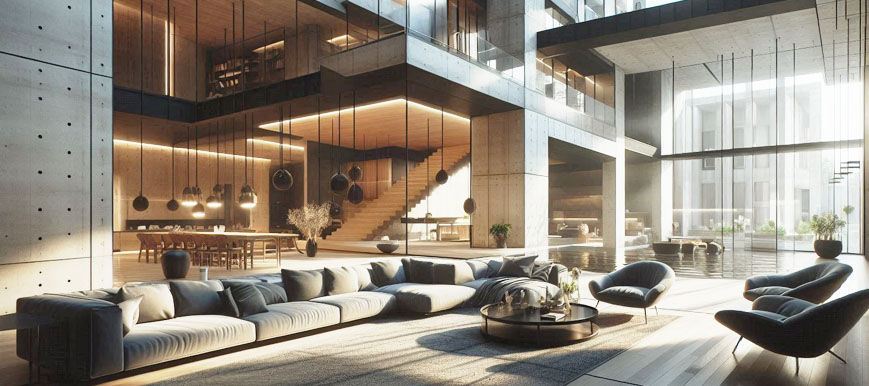
In the field of rendering, "Photorealism in 3D Rendering - Achieving Maximum Impact" represents the thoughtful intersection of design, technology, and storytelling. As projects become increasingly complex, visualisation helps teams justify decisions, align stakeholders, and communicate intent with clarity.
Clients and stakeholders today expect clarity and immersion. Flat plans or basic elevations rarely communicate spatial experience effectively. Convincing imagery, interactive walkthroughs, and time-based animations convey scale, light, and materiality, helping clients visualise outcomes and make informed decisions.
Integration across tools and disciplines is accelerating. When BIM, asset libraries, and real-time engines are connected, edits propagate faster and less information is lost between architects, visualisers, and contractors. This reduces costly surprises on site and ensures smoother project delivery.

“Photorealistic rendering brings ideas to life, helping clients experience designs before construction begins.”
Both photorealism and stylised representations are vital. High-fidelity renders clarify materials and lighting, while expressive visual styles communicate mood and concept during early-stage design. The most persuasive presentations mix these approaches to guide viewers from concept to reality.
Web-based viewers, VR walkthroughs, and AR overlays allow stakeholders to explore design alternatives and provide feedback in real time, turning presentations into interactive, collaborative sessions.
Designers often overlay environmental analyses—daylight studies, solar shading, energy performance—into visual outputs so clients can see how sustainable strategies affect comfort, cost, and efficiency.
A well-crafted story—cinematic sequences, narrated walkthroughs, or phased 4D animations—enhances project presentations to investors, planning authorities, and end-users, making designs more persuasive.
Automation and AI assist with repetitive tasks, such as smart material suggestions, procedural foliage, and automated lighting setups. Despite technological advances, human creativity and critical judgement remain central to high-quality rendering.
"Photorealism in 3D Rendering - Achieving Maximum Impact" highlights a discipline that blends aesthetic intent with technical insight. Embracing integrated workflows, interactivity, and storytelling delivers clearer outcomes, stronger stakeholder alignment, and more resilient design decisions.