


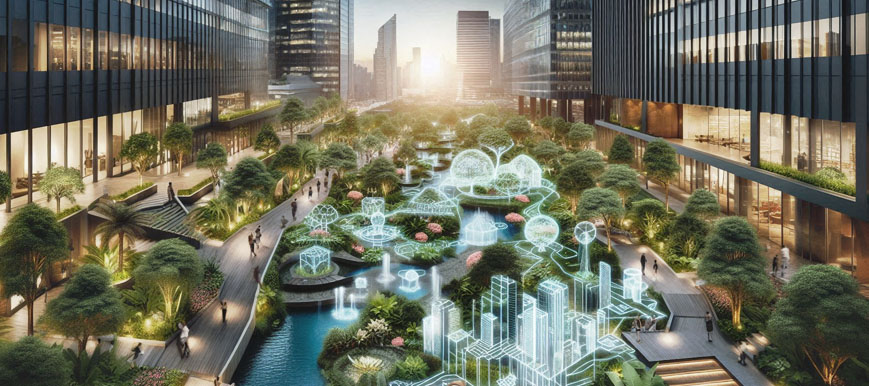
Landscape visualisation uses 3D tools to communicate the design and intent of outdoor spaces. By combining realistic imagery, animations, and narrative, landscape architects can demonstrate how parks, gardens, urban plazas, and streetscapes will look and feel before implementation.
Using photorealistic renders, interactive walkthroughs, and time-based animations, designers help clients and stakeholders experience scale, materials, light, and spatial organisation in outdoor environments. This improves clarity and confidence in decision-making.
Integration of BIM, real-time engines, and asset libraries ensures that changes propagate seamlessly across teams. VR and AR tools enable immersive exploration of landscapes, providing actionable feedback and fostering collaboration.

“Landscape visualisation transforms outdoor design ideas into experiences, making spaces tangible before they exist.”
Environmental analyses, such as sunlight, shading, water management, and ecological impact, can be integrated into visual outputs. This allows stakeholders to understand how sustainable strategies influence comfort, aesthetics, and cost-effectiveness.
Beyond technical accuracy, visual storytelling conveys the vision and narrative of outdoor spaces. Cinematic sequences, phased animations, and guided walkthroughs engage audiences and communicate the design concept effectively.
Landscape visualisation merges design, technology, and narrative to communicate outdoor projects clearly. Through integrated workflows, immersive tools, and interactive storytelling, landscape architects can deliver precise, compelling, and stakeholder-aligned visual experiences.